Storage internals
This document explains the internal design of tileverse-storage, with a focus on the RangeReader byte-range path: how it achieves a unified API across diverse storage backends and where the seams are for adding a new one.
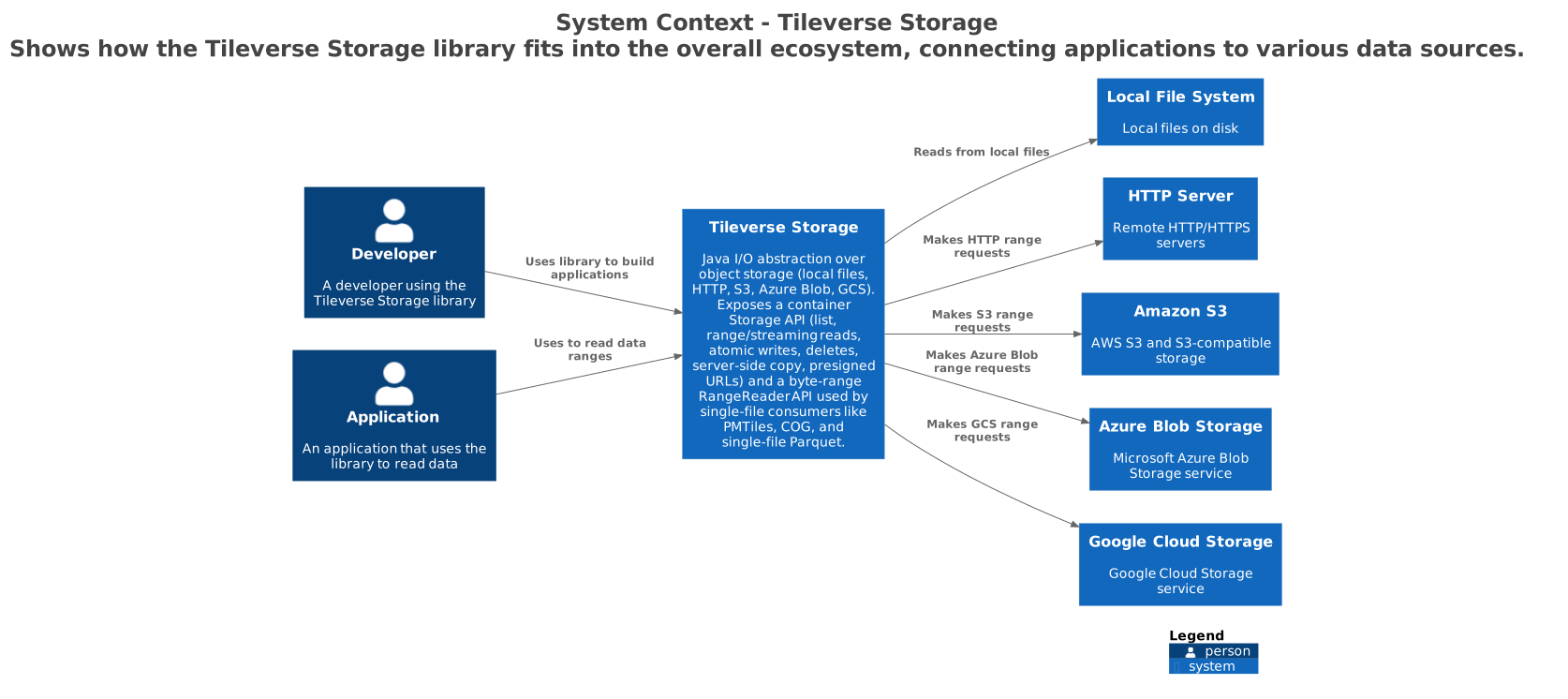
Core Design
The library is built around a single, synchronous interface: RangeReader.
public interface RangeReader extends Closeable {
    // The fundamental atomic operation
    int readRange(long offset, int length, ByteBuffer target) throws IOException;

    // Metadata
    OptionalLong size();
    String getSourceIdentifier();
}
Design Decisions
- Synchronous API: We chose a blocking API over
CompletableFutureor Reactor. This simplifies the implementation of complex logic (like caching and retries) and aligns with Java'sFileChanneland standardInputStreampatterns, which are what most format parsers expect. - ByteBuffers: All data transfer happens via
java.nio.ByteBuffer. This allows for off-heap storage, direct memory mapping, and efficient I/O operations without unnecessary array copying. - Thread Safety: All implementations must be thread-safe. State (like connection pools) is shared, but individual read operations are isolated.
Implementation Hierarchy
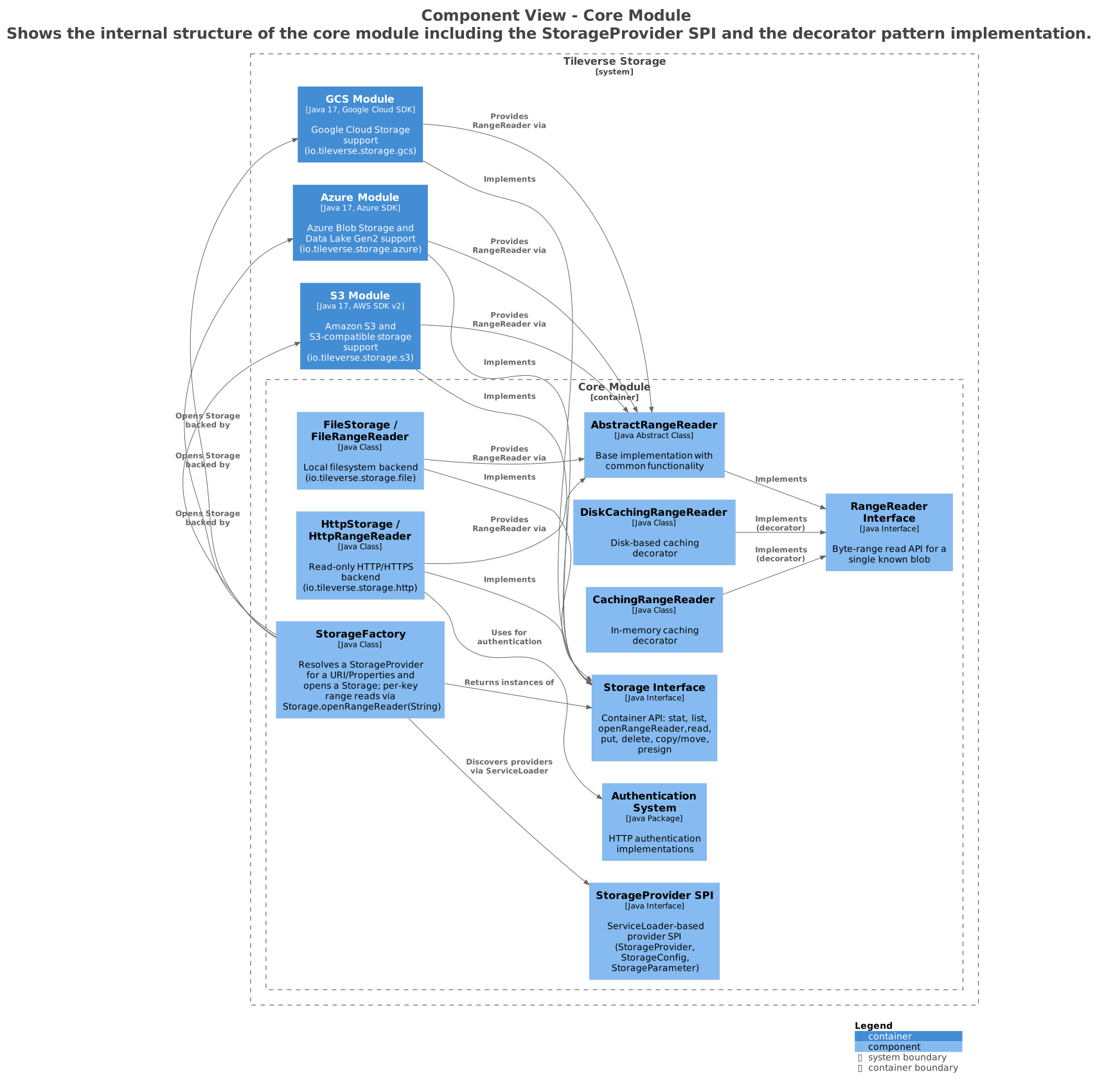
Base Layer: AbstractRangeReader
This abstract class handles the boilerplate:
- Argument validation (bounds checks).
- Buffer handling (position management, slicing).
- Template pattern: delegates the actual byte fetching to
readRangeNoFlip.
Backend Layer
These classes implement the actual network/disk I/O:
FileRangeReader: Wraps aFileChannelopened lazily by the file's real path and closed after the idle timeout with no read in progress. A stale NFS handle or a closed channel retires the channel and the read resumes on a fresh one after the bytes already landed, three attempts per call. Identifies the file by its real path. Uses the OS page cache.HttpRangeReader: Usesjava.net.http.HttpClientto issueGETrequests withRangeheaders. TheHttpClientis refcounted at theHttpStoragelevel (viaHttpClientCache) and shared across sibling readers; per-readerclose()is a no-op, mirroringS3/Azure/GCS. The client shuts down only when the lastHttpStorageholding a lease closes.S3RangeReader: Wraps AWS SDK v2. Maps exceptions to standardIOException. Uses anS3Clientrefcounted byS3ClientCacheat theS3Storagelevel.Azure/GCS: Similar wrappers for their respective SDKs, with matching refcounted client caches.
Decorator Layer
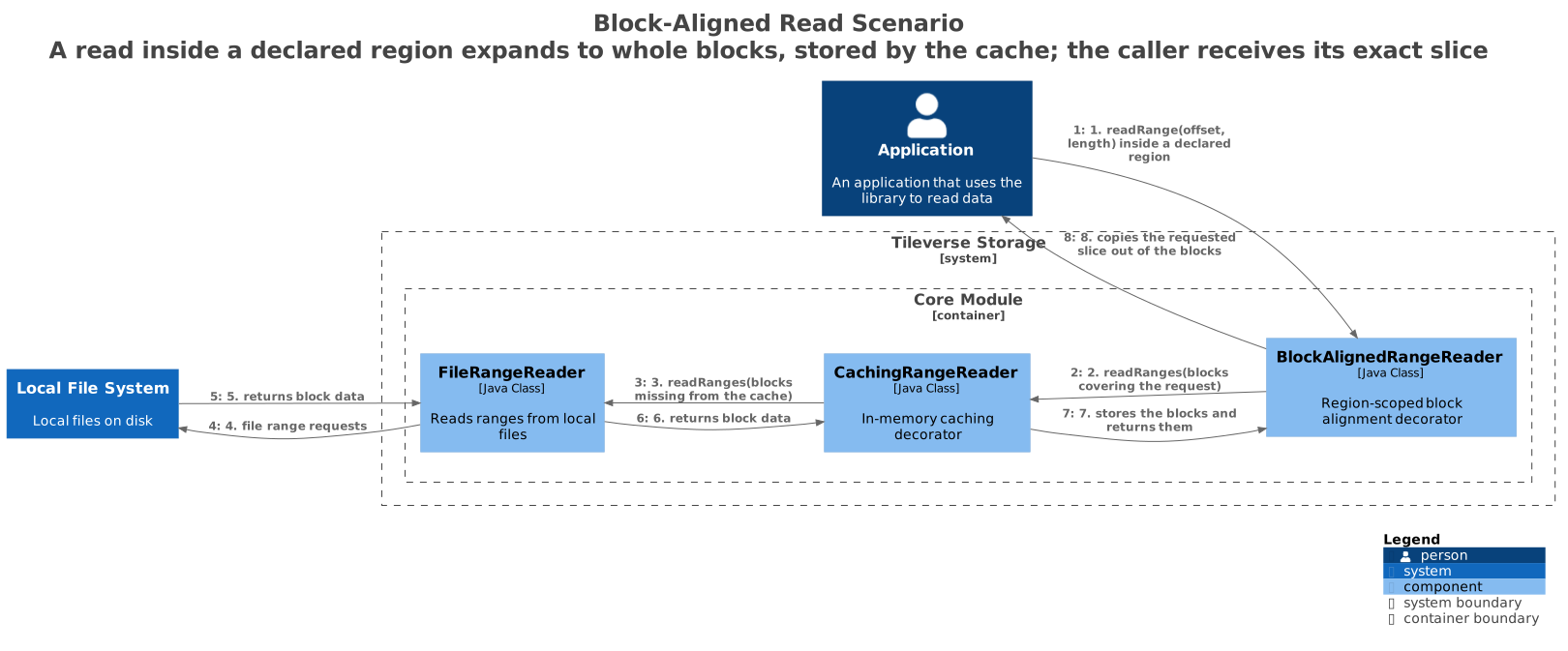
We use the Decorator pattern to add behaviors without modifying backends. The two decorators stack as BlockAlignedRangeReader above CachingRangeReader above the backend:
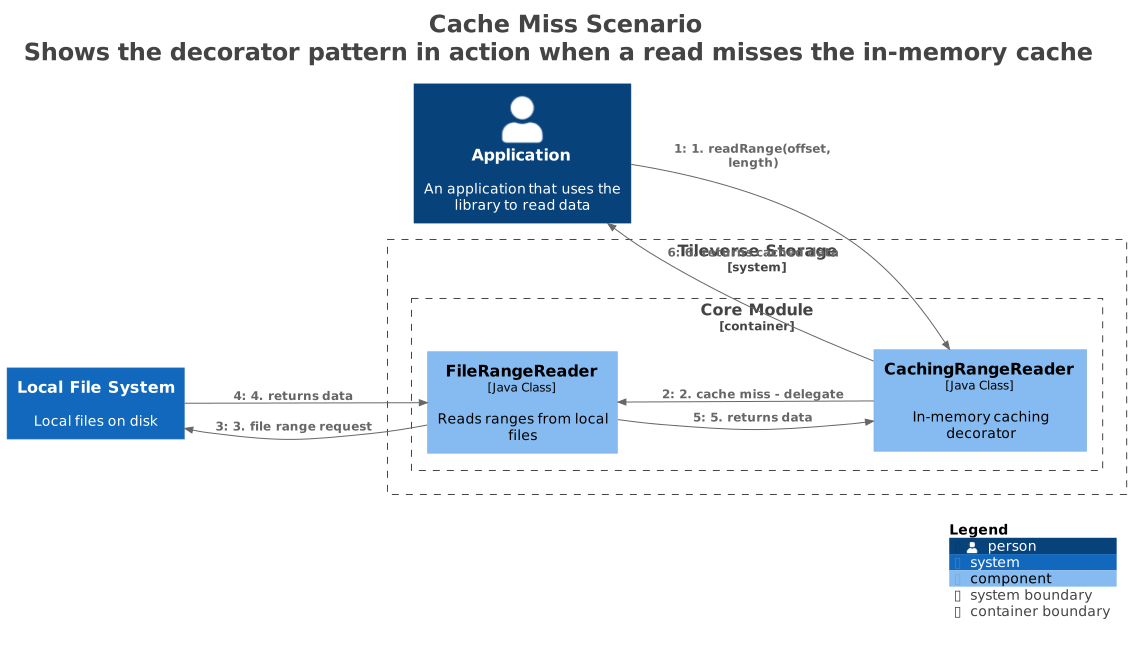
CachingRangeReader: InterceptsreadRange/readRanges. Checks an in-memory Caffeine cache for the exact(offset, length)requested. On a miss, calls the delegate, stores the result under that exact key, and returns the data. The cache is shared across readers and partitioned by the delegate'sgetSourceIdentifier(), which is why S3 and GCS readers over a non-default endpoint include that endpoint in their identifier: the same bucket and key on two endpoints must never share cached bytes. In the other direction, a local file identifies as its real path, and one file reached through a symlink or another spelling of its path shares one partition.BlockAlignedRangeReader: Expands a request that falls fully inside a declared byte region (e.g., "bytes 100-150" inside a declared header region) to the blocks that cover it (e.g., "bytes 0-4096"), fetched from its delegate in one batch call. Requests outside every declared region pass through untouched. Stacked aboveCachingRangeReader, the cache then stores the aligned blocks: block-grain caching inside declared regions, exact-grain caching everywhere else.- Backends: batched reads plan before fetching: nearby ranges merge into shared fetches (about a 350 KB gap budget for object stores, 230 KB for HTTP, 32 MiB max per fetch), which run in parallel per backend (async client on S3, shared executor on GCS/Azure and for HTTP request fan-out and fallback,
multipart/byterangeson HTTP).
Runtime View
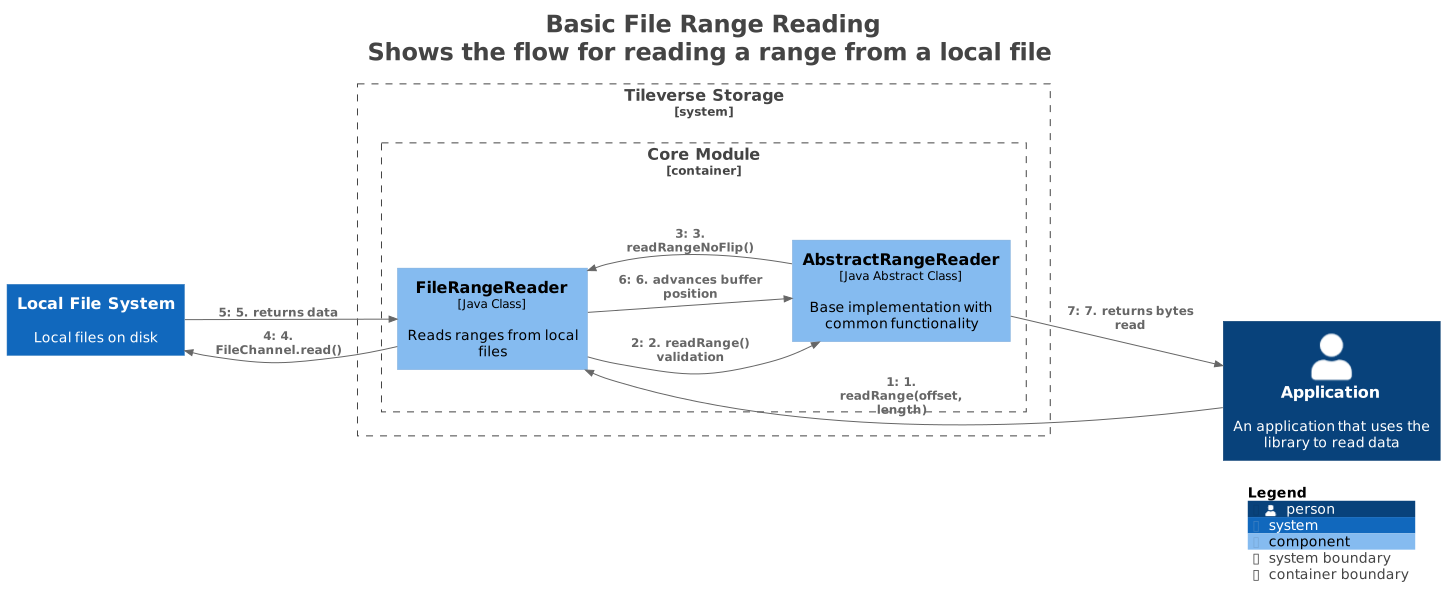
The runtime view describes the dynamic behavior of the library.
Basic File Range Reading
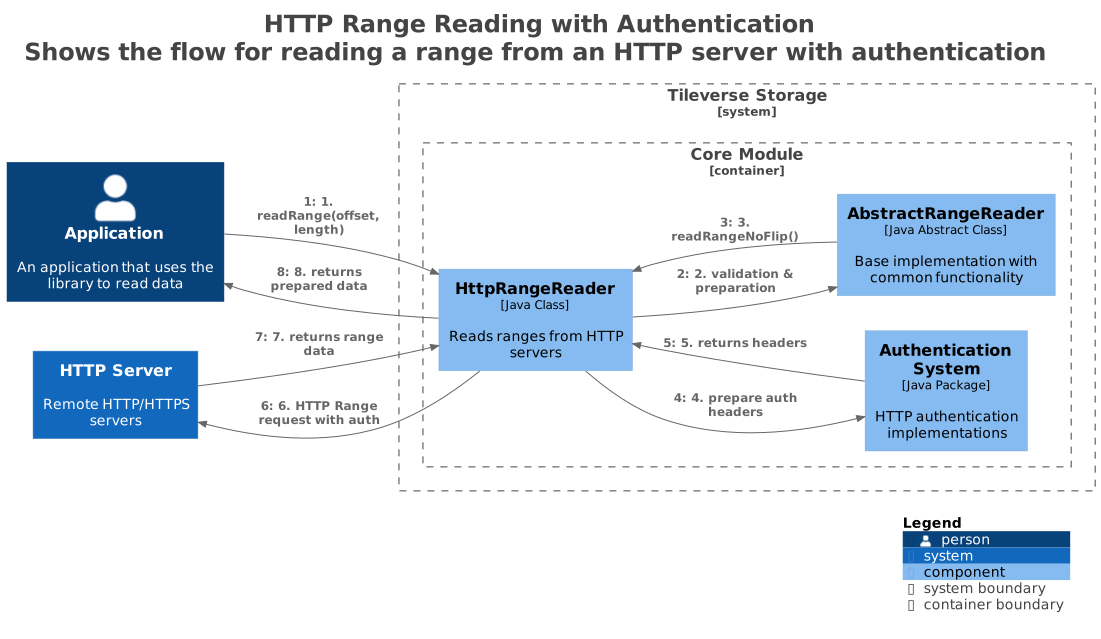
HTTP Range Reading with Authentication
Cache Miss Scenario
Block-Aligned Read inside a Declared Region
Service Provider Interface (SPI)
To support dynamic loading (e.g., for configuration-driven applications), we expose a StorageFactory.
- Discovery: Uses
java.util.ServiceLoaderto find registeredStorageProviderimplementations. - Resolution:
StorageFactory.open(uri)(orfindProvider(StorageConfig)) iterates providers. The first one returningtrueforcanProcess(StorageConfig)is instantiated; ambiguoushttp(s)://URIs go through a HEAD-probe disambiguation step. - Per-key reads:
Storage.openRangeReader(String key)on the returnedStorageproduces aRangeReaderfor a single object under the storage root. - Extensibility: Users can write their own backend (e.g.,
FtpStorageProvider) and register it viaMETA-INF/serviceswithout forking the codebase.
Dependency Structure
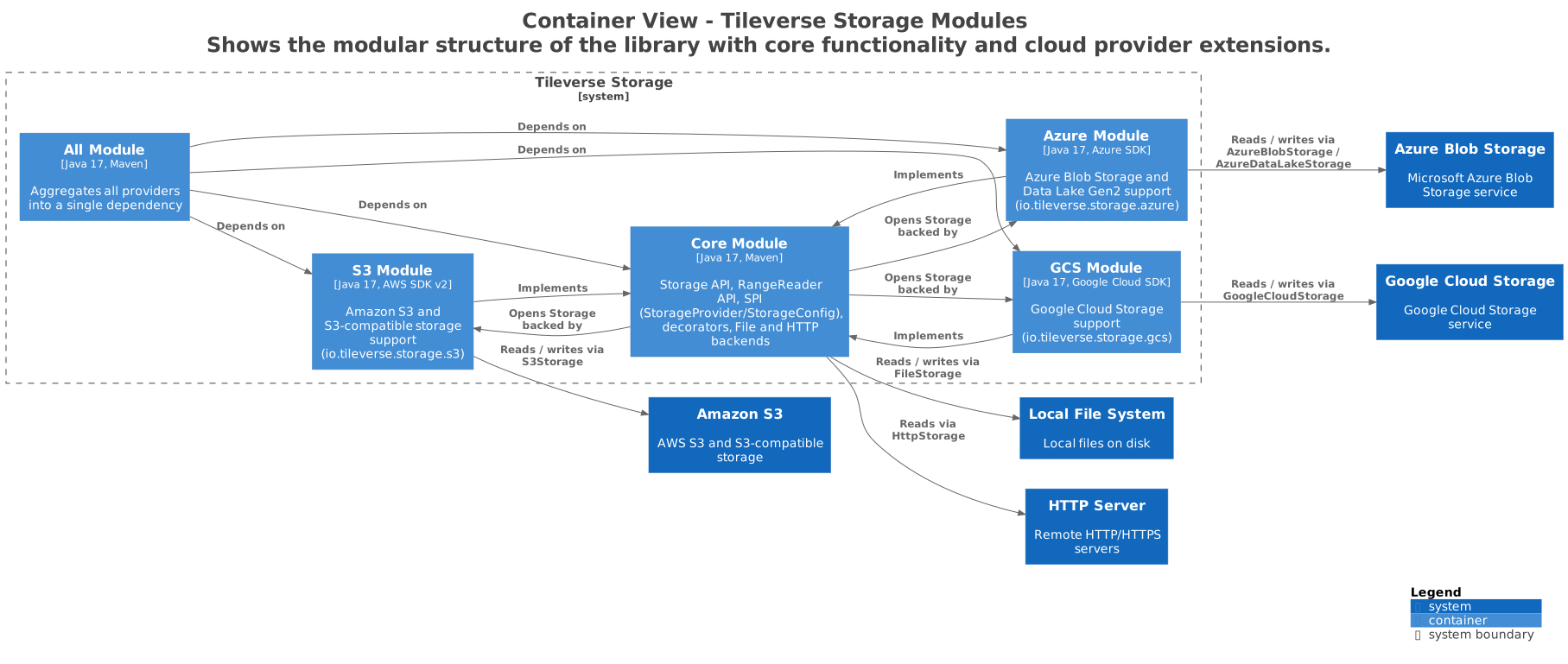
To avoid "dependency hell" (e.g., conflicting Netty versions between Azure and AWS SDKs), the core module has zero heavy dependencies.
tileverse-storage-core: Lightweight. Only depends on SLF4J and Caffeine.tileverse-storage-s3: Pulls in AWS SDK.tileverse-storage-azure: Pulls in Azure SDK.
This allows consumers to pick exactly the providers they need.